Showing posts with label Chocolates. Show all posts

Tuesday, July 17, 2012

The 10 Healthiest Foods on the Planet


These 10 superfoods are proven, expert-beloved disease fighters and energy boosters. Add them to your meals and get on the fast track to a super-healthy body.

1) Lemons

Why They're Healthy:
-- Just one lemon has more than 100 percent of your daily intake of vitamin C, which may help increase "good" HDL cholesterol levels and strengthen bones.

-- Citrus flavonoids found in lemons may help inhibit the growth of cancer cells and act as an anti-inflammatory.

Quick Tip:
Add a slice of lemon to your green tea. One study found that citrus increases your body's ability to absorb the antioxidants in the tea by about 80 percent.

brocolli

2) Broccoli

Why It's Healthy:
-- One medium stalk of broccoli contains more than 100 percent of your daily vitamin K requirement and almost 200 percent of your recommended daily dose of vitamin C -- two essential bone-building nutrients.

-- The same serving also helps stave off numerous cancers.


Quick Tip:
Zap it! Preserve up to 90 percent of broccoli's vitamin C by microwaving. (Steaming or boiling holds on to just 66 percent of the nutrient.)


3) Dark Chocolate

Why It's Healthy:
-- Just one-fourth of an ounce daily can reduce blood pressure in otherwise healthy individuals.

-- Cocoa powder is rich in flavonoids, antioxidants shown to reduce "bad" LDL cholesterol and increase "good" HDL levels.


Quick Tip:
A dark chocolate bar contains about 53.5 milligrams of flavonoids; a milk chocolate bar has fewer than 14.


4) Potatoes

Why They're Healthy:
-- One red potato contains 66 micrograms of cell-building folate -- about the same amount found in one cup of spinach or broccoli.

-- One sweet potato has almost eight times the amount of cancer-fighting and immune-boosting vitamin A you need daily.

Quick Tip:

Let your potato cool before eating. Research shows that doing so can help you burn close to 25 percent more fat after a meal, thanks to a fat-resistant starch.

5) Salmon

Why It's Healthy:
-- A great source of omega-3 fatty acids, which have been linked to a reduced risk of depression, heart disease, and cancer.

-- A 3-ounce serving contains almost 50 percent of your daily dose of niacin, which may protect against Alzheimer's disease and memory loss.


Quick Tip:
Opt for wild over farm-raised, which contains 16 times as much toxic polychlorinated biphenyl (PCB) as wild salmon.

6) Walnuts

Why They're Healthy:
-- Contain the most omega-3 fatty acids, which may help reduce cholesterol, of all nuts.

-- Omega-3s have been shown to improve mood and fight cancer; they may protect against sun damage, too (but don't skip the SPF!).


Quick Tip:
Eat a few for dessert: The antioxidant melatonin, found in walnuts, helps to regulate sleep.

7) Avocados

Why They're Healthy:
-- Rich in healthy, satisfying fats proven in one study to lower cholesterol by about 22 percent.

-- One has more than half the fiber and 40 percent of the folate you need daily, which may reduce your risk of heart disease.


Quick Tip:
Adding it to your salad can increase the absorption of key nutrients like beta-carotene by three to five times compared with salads without this superfood.
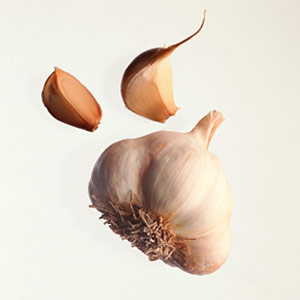

8) Garlic

Why It's Healthy:
-- Garlic is a powerful disease fighter that can inhibit the growth of bacteria, including E. coli.

-- Allicin, a compound found in garlic, works as a potent anti-inflammatory and has been shown to help lower cholesterol and blood-pressure levels.


Quick Tip:
Crushed fresh garlic releases the most allicin. Just don't overcook; garlic exposed to high heat for more than 10 minutes loses important nutrients.


9) Spinach

Why It's Healthy:
-- Spinach contains lutein and zeaxanthin, two immune-boosting antioxidants important for eye health.

-- Recent research found that among cancer-fighting fruits and veggies, spinach is one of the most effective.

Quick Tip:
Spinach is a healthy -- and flavorless -- addition to any smoothie. You won't taste it, we promise! Try blending 1 cup spinach, 1 cup grated carrots, 1 banana, 1 cup apple juice, and ice.


10) Beans

Why They're Healthy:
-- Eating a serving of legumes (beans, peas, and lentils) four times a week can lower your risk of heart disease by 22 percent.

-- That same habit may also reduce your risk of breast cancer.


Quick Tip:
The darker the bean, the more antioxidants it contains. One study found that black bean hulls contain 40 times the amount of antioxidants found in white bean hulls.

------------------------------------------------------------------------
Originally published in FITNESS magazine, October 2008.
http://www.fitnessmagazine.com
------------------------------------------------------------------------


Monday, November 7, 2011

13 Surprising Causes of Constipation

By Amanda Gardner

What causes constipation? Well, the obvious culprits include a low fiber diet, repeatedly ignoring the urge to go, not drinking enough water, or a lack of exercise. But constipation also has other, less-well-known causes, including certain medications and supplements, as well as potentially serious medical conditions. What’s causing your gut trouble?

Here are 13 possible causes of constipation you may not have considered.

Possible Cause No. 01 : Hypothyroidism Hypothyroidism, or an underactive thyroid gland, slows the body’s metabolic processes—even the gut. Not everyone with an underactive thyroid has constipation, nor do all cases of constipation mean that the butterfly-shaped gland in your neck is underperforming. Still, "when I see a young person who’s constipated more than normal and really complaining, I do tend to get a thyroid level," says Carla H. Ginsburg, MD, assistant professor of medicine at Harvard Medical School in Boston.

Possible Cause No. 02 : Painkillers

Painkillers, specifically narcotics, can cause constipation. "A lot of receptors for the narcotic class of drugs are in the digestive tract, so it tends to bring everything to a halt," says Thomas Park, MD, a gastroenterologist with the University of Rochester Medical Center Park in New York. "In general, it?s a good idea for everyone who?s placed on one of these drugs to also place them on a gentle laxative like a stool softener." Some studies (but not all) have suggested that there might be a higher risk of constipation for people who are chronic users of pain relievers like aspirin and ibuprofen.

Possible Cause No. 03 : Chocolate

There’s some evidence that chocolate can cause constipation, though other studies show chocolate may actually help some people, Dr. Park says. In one 2005 study, people with chronic constipation or irritable bowel syndrome were more likely than people without those problems to say that chocolate caused constipation (as did bananas and black tea). Eliminate or cut back on chocolate if you think it could be causing your constipation.

Possible Cause No. 04 : Vitamins

Vitamins in general won’t cause constipation, but certain components, such as calcium and iron, can be a problem. "I would tell a patient to stop taking the iron [or calcium] unless they really need it and, if they do need it, I would put them on a stool softener to counteract that," says Dr. Ginsburg, who is a spokesperson for the American Gastroenterological Association.

Possible Cause No. 05 : Laxative Overuse

Some laxatives work by stimulating bowel activity. Such stimulant laxatives should be taken only as directed. If used for long periods of time, stimulant laxatives can lead to dependence, meaning your body simply won’t function properly without them. Stimulant laxatives include Dulcolax, Ex-Lax, Senna, and others. Don’t take any medication—including laxatives—for longer than instructed by either the product’s label or your doctor.

Possible Cause No. 06 : Too Much Dairy

A diet high in cheese and other low-fiber/high-fat foods such as eggs and meat can slow down your digestion. The obvious solution? Cut down on your intake of such foods, and increase fiber intake to 20 to 35 grams a day. "If you?re going to have cheeses and red meat and eggs, mix in some salads or other foods that have fiber," Dr. Park advises. And avoid fast foods and processed foods, which are generally low in fiber.

Possible Cause No. 07 : Antidepressants

Constipation can be associated with selective serotonin reuptake inhibitor (SSRI) antidepressants such as Prozac (fluoxetine). However, constipation is more of a problem with older tricyclic antidepressants such as Elavil (amitriptyline), says Dr. Park. Why any of these drugs have this effect isn’t clear, though. If you’re taking an antidepressant and have this side effect, think about using a gentle stool softener.

Possible Cause No. 08 : Depression

Ironically, the very condition that antidepressants are meant to treat—depression—can also cause constipation. Like hypothyroidism, depression causes a general slowdown of the body’s normal processes, which can also affect the bowel. People with irritable bowel syndrome, which can be closely linked to depression, are also prone to constipation, Dr. Park says.

Possible Cause No. 09 : Antacids

Antacids are great for fighting heartburn, but some can cause constipation, particularly those containing calcium or aluminum, Dr. Park says. Fortunately, the drugstore aisles are crammed with options, so if one medication is a problem you can try something else. You can also cut down on your risk of heartburn by not overstuffing at meals. And consuming fewer fatty foods and more fiber will help prevent both problems.

Possible Cause No. 10 : Blood Pressure and Allergy Medicines

Constipation can be a side effect of some common drugs used to treat high blood pressure, such as calcium channel blockers and diuretics. Diuretics, for instance, lower blood pressure by increasing urine output, which flushes water from your system. However, water is needed to keep stools soft and get them out of the body. Antihistamines used to treat allergy symptoms can be a problem too.

Possible Cause No. 11 : Inflammatory Bowel Disease (IBD)

Inflammatory bowel disease (IBD) includes two chronic conditions—Crohn's disease and ulcerative colitis. Both can cause cramping, weight loss, bloody stools, and other health problems. Chronic diarrhea is a common symptom of both. However constipation can be a problem too. In ulcerative colitis, constipation can be a sign of inflammation in the rectum and in Crohn's disease it can be a sign of an obstruction in the small intestine. However if you have constipation alone, without other symptoms, it's unlikely to be due to IBD.

Possible Cause No. 12 : Childbirth

Constipation is common during pregnancy, but childbirth itself can be a problem, possibly due to sluggish abdominal muscles or perhaps the use of pain relievers or an anesthetic during the delivery. Also, "there may be some perineal soreness right after the delivery, so the fear of causing more discomfort may be an important factor in the constipation," says Dr. Park. Although stretch injuries during childbirth can sometimes cause nerve damage that leads to constipation, this is less common.

Possible Cause No. 13 : Diabetes and Neurological Conditions

Diabetes can cause nerve damage that can affect a person’s ability to digest food, says Dr. Park. Most people with advanced diabetes know they have it. Still, it’s reasonable to do a blood sugar test on someone who is regularly constipated, says Dr. Ginsburg. Neurological conditions such as multiple sclerosis or Parkinson’s disease can cause constipation. Usually, though, "this goes with another symptom such as trouble urinating, double vision, or a gait problem," Dr. Ginsburg says.

-----------------------
http://health.com
-----------------------


Monday, May 17, 2010

The Healing Power of Chocolate

What is chocolate?

Chocolate is derived from the cocoa bean. Beans are removed from their pods, fermented, dried, roasted, and then made into a cocoa mass or cocoa liquor. This is then pressed to make cocoa butter and cocoa cake, which is then ground up into powder.
Cocoa is a rain forest herb, technically known as Theobroma Cacao. Cocoa has been used by indigenous tribes in South and Central America for thousands of years. The tribes have used it to fight parasites, heal snakebites, and as a general antiseptic.

How does chocolate heal?

Research from University of California, Davis shows that eating dark chocolate boosts oxidation levels. Chocolate contains flavonoids, which are part of the group of antioxidants found in tea, red wine, and various fruits and vegetables. Increased levels of flavonoids lowers the risks of heart disease, lung cancer, prostate cancer, and type 2 diabetes. Eating dark chocolate also decreases LDL (bad cholesterol) oxidation and thus reduces the risks of blood clots, lowers blood pressure, and increases blood flow to the arteries.

How much chocolate should I eat and what kind is best?

1 ounce of dark chocolate a day or 7 ounces per week provides the needed antioxidants. Dark chocolate, known as “bittersweet” or “semisweet” chocolates are best. These chocolates have a higher percentage of cocoa and little or no added sugar. The dark chocolate should be made from cocoa butter rather than fats like palm or coconut oils. The darker the chocolate, the more flavonoids are in the chocolate. Milk binds to antioxidants, making them unavailable, so milk chocolate is not an antioxidant source. Milk chocolate candies are pretty much just candy and don’t have nutritional value to you. Chocolates made in Europe are generally richer in cocoa and would be good to try.

Should I replace fruits and vegetables with chocolate?

No. Fruits and vegetables also contain natural antioxidants and are lower in calories. A 100 gram serving of Hershey’s Special Dark chocolate has 531 calories, but a 100 gram raw apple has only 52 calories. Fruits and vegetables have more flavonoids than chocolate and also have vital vitamins and minerals
that chocolate lacks.

Conclusion

You can maintain a healthy diet that includes chocolate!! Add dark chocolate to a diet rich in fruits and vegetables and you’ll have a healthier heart and a smile on your face.

*************************************************
Article from : http://www.chocoholicsheaven.com/
*************************************************

Sunday, January 17, 2010

Chocolate Lowers Risk Of Heart-Related Deaths


Heart attack survivors who eat choccolate two or more times per week can cut their risk of dying from heart disease about threefold compared to those who never touch the stuff, scientist have reported.

Smaller quantities confer less protection but are still better than none, according to the study which will be published in next month's issue of the Journal of Internal Medicine.

Earlier research had established a strong link between cocoa-based confections and lowered blood pressure or improvement in blood flow. It had also shown that chocolate cuts the rate of heart-related mortality in healthy older men and post-menopausal women.

The new study, led by Dr. Imre Janszky of the Karolinska Institute in Stockholm, is the first to demonstrate that consuming chocolate can help ward off the grim reaper if one has suffered attack.

"It was specific to chocolate - we found no benefits from sweets in general," said Mr. Kenneth Mukamal, a researcher at Beth Israel Deaconess Medical Center in Boston and a co-author of the study.

It seems that antioxidants in cocoa may be contributing to the life-saving property of chocolate, he told AFP.

Antioxidants are compounds that protect the body against free radicals - molecules which accumulate in the body over time that can damage cells and are thought to play a role in heart disease, cancer and the ageing process.

The the study, Dr. Janszky and colleagues tracked 1,169 non-diabetic men and women, aged 45 to 70 yeards old, in Stockholm Country during the early 1990s from the time they were hospitalized with their first heart attack.

The participants were queried before leaving hospital on their food consumption habits over the previous year, including how much chocolate they ate on a regular basis.

"Our findings support increasing evidence that chocolate is a rich source of beneficial bioactive compounds," the researchers concluded.

The results held true for men and women and across all the age groups included in the study. Other factors that might have affected the outcome - alcohol consumption, obesity and smoking - were taken into account.

So should we all be loading up on cocoa-rich sweets?

"I'm pretty cautious about chocolate because we're working on weight problems with so many individuals," said Dr. Mukamal, who is also a physician.

"However, I do encourage those who are looking for healthier desserts to consider chocolate in small quantiies," he said.

"For individuals with no weight issues and who have been able to eat chocolate in moderation and remain slim, I do not limit it," he added.

The researches said that clinical trials were needed to back up their findings.

In the meantime, however, a bit of chocolate may not be amiss, they suggested.

Article taken from "Mind Your Body" - 20 August 2009
Straits Times Publication, Singapore

=========================================
Chocolate University Online

Take Your Love Of Chocolate To The Next Level... At Chocolate University Online Our ' Taste And Understand ' Training Formula Guides You With 40 Exceptional Weekly Lessons Helping You Learn All About Your Favorite Food In The Relaxed Setting Of Your Home.
=========================================